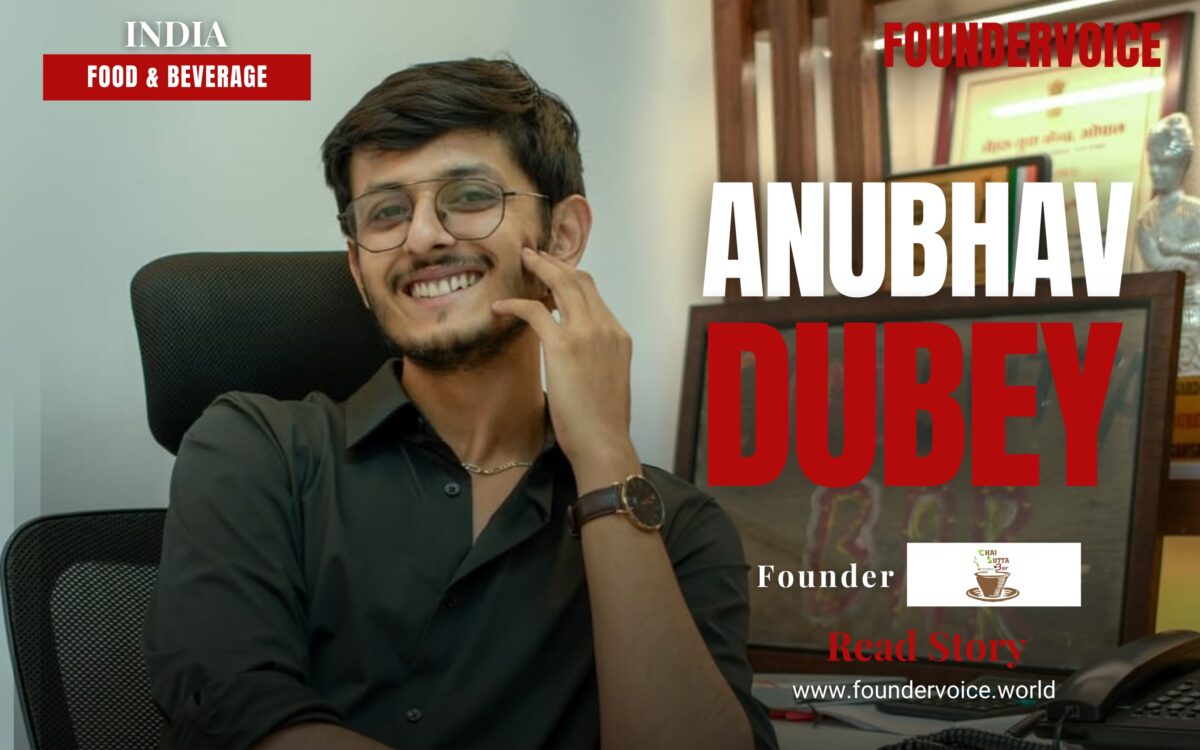


Anubhav Dubey story is an inspiring story. He is the founder of Chai Sutta Bar, which was started in June 2016 in Indore, India. Today, the company’s valuation is estimated to be around 60 million U.S. dollars. The brand serves millions of active customers every month through its rapidly growing outlet network across India and abroad. Chai Sutta Bar solves the rising need for affordable, hygienic, and youth-friendly chai cafés by transforming the traditional Indian tea experience into a modern, accessible, and community-driven space that combines taste, culture, and entrepreneurship at scale.
Company Overview
| Origin Country | India |
| Legal Name | Chai Sutta Bar Trading Private Limited |
| Brand | Chai Sutta Bar |
| Co-Founder | Anubhav Dubey & Anand Nayak |
| CEO | Anubhav Dubey |
| Industry | Food & Beverage |
| Website | www.chaisuttabarindia.com |
| Year of Founding | 2016 |
| Valuation | Approx. USD 60 million (as of 2025) |
| Outlets | 600+ |
| Employees | 1,500+ direct, thousands more through franchises (as of 2025) |
| Headquarters | Indore, Madhya Pradesh, India |
| Status | Active |
FOUNDER OVERVIEW: ANUBHAV DUBEY
➤ Net Worth
Chai Sutta Bar’s reported turnover of ₹150 crore, his net worth is estimated between 10-20 crores, though exact figures remain undisclosed
➤ Ownership in Company
He retains a significant ownership stake in Chai Sutta Bar, believed to be over 50% when combined with co-founder holdings, ensuring strategic control and long-term vision continuity.
➤ Ventures Founded
- Chai Sutta Bar (2016): A chai-based café chain offering flavored milk tea, snacks, cold beverages, and youth-friendly ambience. Known for its iconic kulhad chai, affordable pricing, and strong franchise model.
- Business Consulting & Franchise Ventures (2021 onward): Anubhav frequently mentors young entrepreneurs, invests time into franchise education, and is involved in small-scale businesses connected with F&B operations.
➤ Investments
Anubhav is not known for large personal financial investments; however, he has engaged in:
- Small Startup Mentorship Programs (2022–2025)
Sector: Food, retail, and franchise education
Reason: To help early-stage entrepreneurs build sustainable businesses. - Kulhad Supply Chain Support (Ongoing)
Sector: Rural Craft & Pottery
Purpose: Economic upliftment of local artisans by ensuring bulk, consistent orders.
➤ Recognition & Awards
- Entrepreneur of the Year (2021)
Institution: Entrepreneur Magazine (India Edition)
Reason: For building one of India’s fastest-growing café chains. - Business Leadership Award (2022)
Institution: National Business Awards India
Reason: Recognized for innovative franchising and youth employment. - Top 30 Under 30 (2020)
Institution: Multiple business media platforms
Reason: Early-stage success and rapid scaled growth. - Social Impact Award (2023)
- Institution: MSME-focused organization in India
- Reason: Impact on rural artisans through consistent kulhad demand.
➤ Connect with Founder on Social Media
PERSONAL STORY: ANUBHAV DUBEY
Anubhav Dubey grew up in Rewa, a small but culturally rooted city in Madhya Pradesh, where his middle-class upbringing taught him discipline, humility, and an early sense of responsibility. He was not the loudest or the most academically celebrated child, but he was deeply observant. He watched how shopkeepers interacted with customers, how small businesses survived in tight conditions, and how people found happiness in simple routines. These early impressions would later become the emotional foundation for his entrepreneurial instincts.
Like many young Indians, Anubhav followed the predictable path laid out for him—study hard, crack a competitive exam, secure a stable career, and keep life simple. His family wanted him to become a government officer, and with that expectation in mind, he moved to Delhi to prepare for UPSC. The city overwhelmed him at first, but it also showed him a bigger picture of life. He met ambitious people, saw intense competition, and slowly realized that his heart wasn’t in government service. While his friends thrived on books and coaching centers, Anubhav found himself drawn toward real-world conversations and the energy of small entrepreneurial ideas floating around him.
Over time, an uncomfortable truth settled in—he wasn’t meant for an exam hall future. The decision to quit UPSC preparation was emotionally heavy. He feared disappointing his parents, questioned his own abilities, and felt the anxiety that comes with stepping into the unknown. With no plan, little money, and no clear direction, he left Delhi and returned to Indore. This return wasn’t a celebration; it felt like failure. But sometimes, failure pushes people toward what they were meant to do.
Back in Indore, he reconnected with his childhood friend, Anand Nayak. Their conversations about life, dreams, and possibilities slowly reignited Anubhav’s entrepreneurial courage. He realized that what he lacked in capital, he made up for in people skills, resilience, and a calm but sharp understanding of Indian youth behavior. His simple upbringing had taught him that great ideas are often found in everyday experiences—and nothing was more everyday in India than chai.
Personal struggles shaped him more than any classroom. He faced family pressure, financial uncertainty, and the emotional stress of not fitting into the traditional definition of “success.” But the moment he accepted that entrepreneurship was his real path, things began to change internally. He felt a sense of freedom he had never felt before. His confidence grew, his thinking sharpened, and he started viewing problems as opportunities instead of obstacles.
Anubhav’s personal success lies not in wealth or fame, but in discovering his authentic direction early in life. He learned to stay grounded, to treat people with respect, and to value honest work over glamour. His later support for thousands of kulhad artisans wasn’t a business decision—it was a reflection of the values he grew up with. His story is not about a genius breakthrough, but about a young man who trusted his intuition, embraced his failures, and walked courageously toward a dream that would one day change how India drinks chai.
FOUNDING STORY: CHAI SUTTA BAR
Inspiration Behind the Idea
The idea for Chai Sutta Bar emerged from a simple yet powerful observation: chai is India’s emotional fuel, consumed everywhere — from bustling metros to remote towns. But despite its huge demand, chai was never treated as a “branded experience.” Most cafés catered to coffee drinkers, and the tea culture remained unorganized and informal.
Anubhav Dubey saw a gap — India needed a youthful, affordable, hygienic, café-style chai experience that still felt local and desi. He envisioned a space where chai lovers could hang out, relax, and enjoy kulhad wali chai without the premium pricing of Western cafés.
Founding Team
In 2016, Anubhav teamed up with his childhood friend Anand Nayak, both sharing a passion for entrepreneurship and the dream of building something unique from scratch.
Anubhav brought strong business instincts, street-smart thinking, and a deep understanding of consumer psychology. Anand contributed operational discipline, financial planning, and on-ground execution. Together, they perfectly balanced creativity and practicality.
Starting Capital
The venture famously began with just ₹3 lakh, pooled from the founders’ savings and small borrowings. With no big investor, no formal business backing, and no F&B experience, they set up their first outlet near a girls’ hostel in Indore — a strategic location chosen purely through intuition and hustle.
That single outlet quickly became a hotspot. The affordable menu, smoky kulhad aroma, and friendly vibe attracted students and young professionals, proving that the concept had massive potential.
Early Challenges
- Chai Sutta Bar’s early journey came with real challenges:
- Convincing landlords to rent space to two young founders with no business background
- Battling the assumption that “chai can’t be a brand”
- Managing quality across early outlets on a thin budget
- Training staff to create a standardized kulhad experience
- Building a brand identity while keeping prices extremely low
- The solution was relentless execution: strict recipe SOPs, a strong brand personality, and a youth-focused marketing style that felt raw, relatable, and Instagram-friendly — long before small-town cafés were doing it.
Breakthrough
The breakthrough arrived when the brand saw extraordinary word-of-mouth growth. Within the first year, the Indore outlet started serving thousands of kulhads daily. The “kulhad culture” became a sensation, and franchise inquiries poured in from across India.
By 2018–2020, Chai Sutta Bar expanded rapidly through a franchise-led model, entering Tier 1, Tier 2, and Tier 3 cities with equal ease. The founders’ strategy was clear:
- Keep pricing affordable
- Keep ambience youthful
- Keep operations simple
- Keep the brand rooted in the emotional value of chai
By 2022, the brand had grown to 400+ outlets, serving millions of kulhads per day and creating significant employment opportunities for underprivileged communities — a mission close to Anubhav’s heart.
Even as the brand scaled, it stayed committed to its core philosophy: offering everyday Indians a place to unwind over a cup of chai that feels both premium and nostalgic.
Chai Sutta Bar’s founding journey shows how a humble Indian beverage, when combined with branding, culture, and vision, can evolve into one of the country’s most celebrated youth-driven café chains.
COMPANY PROFILE: CHAI SUTTA BAR
Chai Sutta Bar is a fast-growing Indian café chain offering freshly brewed kulhad chai, cold beverages, and light snacks at affordable prices. Known for its youth-oriented ambience and strong franchise model, the brand aims to deliver hygienic, delicious, and culturally rooted tea experiences to customers across India and abroad.
Area Served
- India (Primary Market): The brand’s largest presence, with outlets in metro cities, Tier-2 hubs, and expanding Tier-3 towns. Strong brand recall among youth.
- Middle East: Outlets in countries like Dubai and Oman bring an Indian tea culture experience to international audiences.
- Asia (Selected Countries): Plans and expansions in Nepal and Bangladesh offer growing visibility across South Asia.
Vision & Mission
Vision: To make chai a global lifestyle beverage by building community-driven cafés that bring people together.
Mission: To serve high-quality kulhad chai at affordable prices while creating large-scale employment opportunities for youth and rural artisans.
Services / Products Offered
Primary Offerings
- Kulhad chai (various flavors)
- Tandoori chai
- Chocolate chai
- Masala chai
- Cold coffee
- Milkshakes
- Mojitos
- Thick shakes
Food Items
- Sandwiches
- Maggi variations
- Burgers
- Garlic bread
- French fries
- Quick bites
Cookies and muffins
Business Model
Chai Sutta Bar operates on a mix of company-owned outlets and a strong franchise-driven expansion model. The brand focuses on:
- Low-cost setup for franchise partners
- High daily footfall
- Strong supply chain standardization
Rural kulhad supply system
Target markets include youth, students, office-goers, and families seeking affordable café experiences.
Revenue Model
Primary Revenue Streams
- Beverage sales (chai, coffee, shakes)
- Food sales
- Franchise fees
- Royalty fees from franchise outlets
- Branded merchandise (selected outlets)
Secondary Revenue Streams
- Event partnerships
- Bulk kulhad orders
New-format stores (express, airport kiosks)
Market Landscape & Competitors
As of 2025, India’s QSR café market is expanding, with rising demand for budget-friendly, quick-service tea cafés.
Major Competitors
- Chai Point
Focus: Tech-enabled chai delivery - MBA Chai Wala
Focus: Youth-focused chai cafés - Chaayos
Focus: Premium tea customization - Local tea chains
Focus: Regional cost-friendly outlets
Chai Sutta Bar competes by offering affordability, mass-branding appeal, and consistency across franchises.
USP (Unique Selling Proposition)
- Fresh chai served in eco-friendly kulhads
- Affordable pricing for all customer segments
- Youth-centric ambience and storytelling
- Massive franchise support system
- Strong rural employment impact through kulhad artisans
Growth Highlights
- 2016: First outlet opened in Indore
- 2017: Rapid expansion across Madhya Pradesh
- 2019: Crossed 100 outlets
- 2021: National recognition after multiple media features
- 2022: International expansion to the Middle East
- 2024: Over 450 outlets across multiple countries
- 2025: Recognized as one of India’s largest chai-based café chains
Funding & Investment History
- Chai Sutta Bar is fully bootstrapped.
- It has grown without external investors, relying on:
- Franchise fees
- Reinvested profits
- Operational discipline
Awards & Recognition (Company)
- Best Emerging Franchise Chain Award (2022)
- Social Impact Through Rural Employment Award (2023)
- Recognized among India’s Top Youth Brands (2024)
Team Size & Culture
As of 2025, Chai Sutta Bar directly employs over 1,500 people, with thousands more indirectly supported. The brand culture emphasizes:
- Respect for all
- Skill development
- Community-driven leadership
- Practical training for youth
Future Plans
- 1,000+ outlets globally
- Expansion into airports and malls
- Dedicated kulhad production units
- Premium and express store formats
- Global chai lifestyle merchandise
Connect with Company’s Official Social Media
CONCLUSION
“If your dreams don’t scare you a little, they are not big enough.” — Anubhav Dubey (Interview Quote)
Anubhav Dubey’s journey teaches us that extraordinary success often starts with very ordinary beginnings. His story shows that you don’t need perfect circumstances, wealthy backgrounds, or big investors to create a national brand. What you truly need is courage, clarity, discipline, and the belief that simple ideas can change millions of lives. Chai Sutta Bar proves that cultural authenticity, affordability, and community impact can build powerful businesses. His journey inspires every young dreamer to take the first step—even if it feels scary—and trust the process that follows.